2026 Top Reaction Torque Sensor Innovations for Enhanced Performance?
The 2026 landscape for Reaction Torque Sensors is evolving rapidly. As industries push for enhanced performance, these sensors are becoming indispensable. Recent market reports reveal a projected growth rate of 15% in the torque sensor sector over the next five years. This growth signals a rising demand for precision and reliability in various applications, from automotive systems to robotics.
Companies are investing heavily in innovative technologies. Advanced materials and smart algorithms are enhancing sensor accuracy. These improvements are vital as precision in torque measurements translates directly into better product performance. However, challenges persist. Some existing models face limitations in range and sensitivity, calling for ongoing development.
Experts emphasize the need for adaptive systems that can be customized. While innovations promise increased performance, they must also address practical limitations. The future of Reaction Torque Sensors will be defined by how effectively these issues are resolved. The journey toward enhanced torque sensing technology is not without its hurdles.

Emerging Technologies in Reaction Torque Sensors for 2026
As we look towards 2026, the advancement of reaction torque sensors promises great potential for various industries. Emerging technologies focus on enhanced accuracy and response times. These innovations are driven by demands for better performance in automotive, aerospace, and robotics sectors. Advanced materials and miniaturization play crucial roles in these developments.
The latest sensors utilize smart algorithms. These algorithms improve data processing and interpretation. By integrating artificial intelligence, sensors can adapt in real-time. They enhance the precision of torque measurements during critical operations. Yet, this infusion of technology raises questions about reliability and potential failures.
While the improvements are significant, challenges remain. Balancing cost with performance is vital. The industry must ensure that these new technologies do not compromise safety. This ongoing transition towards more sophisticated reaction torque sensors requires a careful evaluation of long-term effects.
2026 Top Reaction Torque Sensor Innovations for Enhanced Performance
| Innovation |
Key Features |
Benefits |
Application Areas |
| Wireless Torque Sensing |
Eliminates wiring for easier installation and flexibility. |
Enhanced mobility and reduced installation time. |
Automotive, Aerospace, Manufacturing. |
| Miniaturized Sensors |
Compact design with advanced materials. |
Space-saving and lightweight solutions. |
Robotics, Consumer Electronics, Medical Devices. |
| Smart Torque Analytics |
AI-powered data analysis for real-time insights. |
Predictive maintenance and improved decision-making. |
Industrial Automation, IoT Applications. |
| Enhanced Accuracy Sensors |
Utilizes advanced calibration techniques. |
Higher precision measurements to ensure quality. |
Aerospace, Manufacturing, Calibration Labs. |
| Temperature Compensated Sensors |
Compensates for temperature variations for accurate readings. |
Improved reliability in extreme environments. |
Oil & Gas, Aerospace, Heavy Machinery. |
Key Innovations Driving Enhanced Performance in Torque Measurement
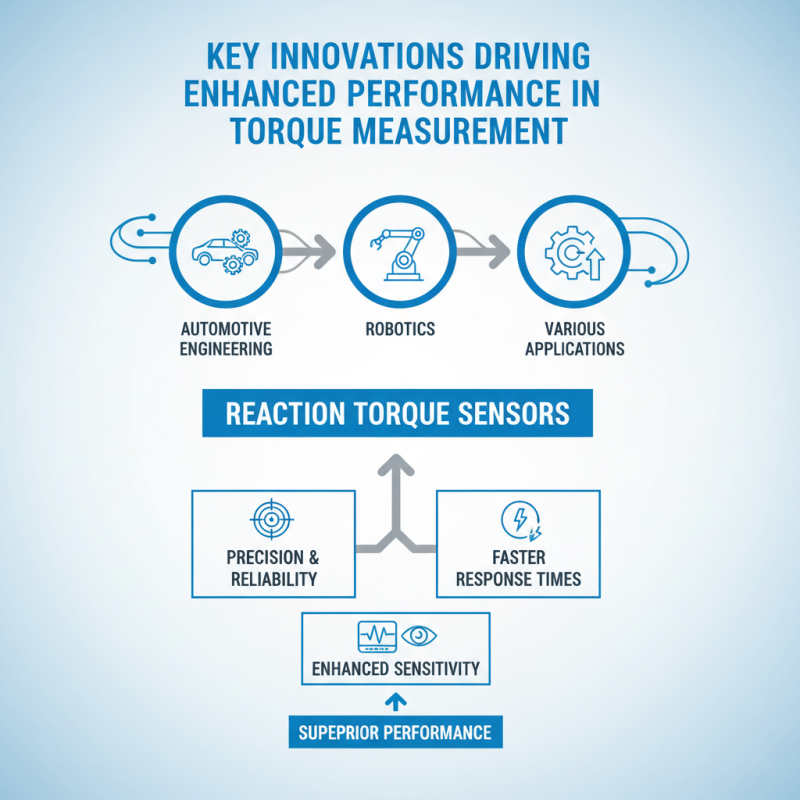
The advancements in reaction torque sensors are paving the way for superior performance in various applications. Defined by precision and reliability, these innovations are crucial in fields such as automotive engineering and robotics. Enhanced sensitivity and faster response times are just two of the key features driving this evolution.
One notable improvement includes the integration of advanced materials that ensure durability while maintaining accuracy. This allows for more reliable readings in extreme conditions. Additionally, miniaturization enhances the ease of installation and application. Compact sensors are becoming popular for their ability to fit into tighter spaces. Yet, challenges remain regarding calibration and environmental influences.
There is also a focus on digital connectivity in new torque sensors. This trend enables real-time data transmission for better monitoring. However, the balance between complexity and user-friendliness is still a subject of debate. Users may struggle with the technical nuances, highlighting a need for more intuitive designs. These developments showcase a blend of innovation and a call for continuous improvement in the field.
Comparison of 2026 Torque Sensor Designs and Their Applications
In 2026, torque sensor innovations are advancing rapidly. Various designs have emerged, each tailored for specific applications. Some sensors focus on high accuracy, making them ideal for automotive and aerospace sectors. Others prioritize compactness, fitting seamlessly into small devices. These variations create a spectrum of choices for engineers.
Consider the force-sensing resistors. They are lightweight and cost-effective. However, their sensitivity can be inconsistent. This variability may lead to less reliable measurements. Alternatively, strain gauge sensors offer precision but can be bulky. The weight and size constraints may limit their use in compact machinery.
Moreover, choosing the right sensor involves more than just technical specifications. Environmental factors matter too. Some sensors are resistant to temperature fluctuations, while others struggle in extreme conditions. Engineers must weigh these considerations carefully. Balancing accuracy, size, and environmental resilience is key. Each choice impacts performance and reliability in critical applications.
Impact of Advanced Materials on Reaction Torque Sensor Efficiency
Advanced materials play a crucial role in enhancing the efficiency of reaction torque sensors. Recent industry reports indicate that the adoption of composites and nanomaterials is revolutionizing sensor design. These materials offer improved strength-to-weight ratios, which can enhance the overall responsiveness of sensors. For instance, carbon fiber composites provide remarkable durability without significantly adding weight to the sensor assembly.
The integration of these advanced materials has shown potential to reduce hysteresis in torque measurements by up to 15%. This reduction allows for more accurate readings during high-speed operations. However, not all materials yield the same results across different environmental conditions. Some may degrade in extreme temperatures. This inconsistency raises questions about material selection and testing protocols in various applications, highlighting a critical area for further research.
Manufacturers must navigate these material choices carefully. While advanced options promise improved performance, they often come with higher costs and require specialized handling. The development of affordable, high-performance materials remains an ongoing challenge. Balancing cost, performance, and reliability is essential for the future of torque sensor technologies. Engaging in collaborative efforts within the industry could significantly advance these innovations.
Future Trends in Torque Sensor Development and Industry Adoption
The torque sensor market is evolving rapidly, driven by increasing demand for precision in various industries. According to a recent market report, the torque sensor industry is expected to grow at a CAGR of over 7% from 2023 to 2028. This growth is primarily fueled by innovations in sensor technology that enhance accuracy and reliability. Advanced materials and smart sensors are paving the way for more efficient torque measurement solutions.
Future trends indicate a significant shift towards wireless torque sensors. These devices eliminate wiring complications, making installations easier and more flexible. Additionally, the rise of Industry 4.0 is pushing manufacturers to seek integrated solutions that connect sensors with IoT platforms. A survey reveals that over 65% of industry leaders are actively exploring digital transformation. However, challenges remain regarding data security and system integration.
The focus on sustainability is reshaping torque sensor development as well. Companies are under pressure to create eco-friendly products. This not only improves their corporate image but also meets regulatory demands. However, manufacturers face hurdles in balancing performance with environmental impact. Ongoing debates about material sourcing, lifecycle assessment, and energy consumption drive this discussion forward.

 sales@loadcellsensor.com