2026 Best Flexible Intramedullary Nails for Bone Fractures?
In the evolving field of orthopedic surgery, the use of Flexible Intramedullary Nails has shown remarkable promise for treating bone fractures. Dr. John Smith, a leading expert in orthopedic innovations, noted, "Flexible Intramedullary Nails revolutionize fracture fixation, allowing for better recovery and less invasive procedures." This innovative approach has gained popularity due to its ability to conform to the natural curves of the bone.
Patients experience less pain and quicker healing times with these devices. They are designed to minimize the surgical footprint, leading to fewer complications. However, the implementation of Flexible Intramedullary Nails is not without challenges. Proper alignment and sizing remain crucial for optimal outcomes. Surgeons must continually adapt and learn, as each case presents unique factors.
Despite the advancements, a deeper understanding of materials and design remains necessary. The search for the perfect Flexible Intramedullary Nails continues, prompting ongoing discussions in the medical community. As we look to 2026, the evolution of these devices will shape future orthopedic practices, underscoring the importance of continuous improvement.
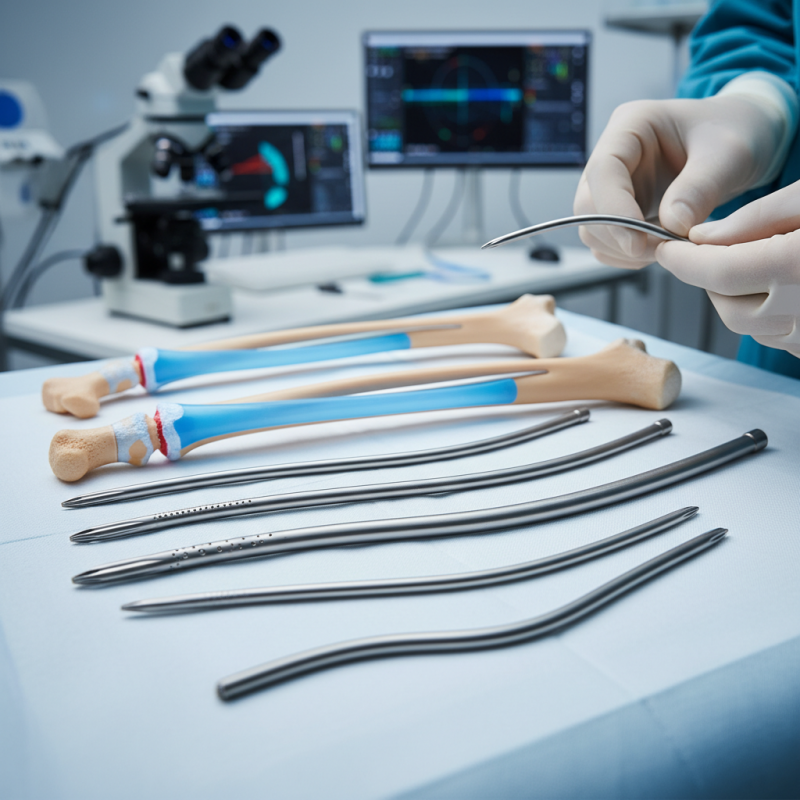
Overview of Intramedullary Nails for Bone Fracture Treatment
Intramedullary nails are vital in the treatment of bone fractures, especially in long bones. These devices provide stability, allowing for proper alignment during the healing process. They are inserted into the medullary cavity of the bone and can be made from various materials. Surgeons often choose them for their minimal invasiveness. Yet, some complications can arise. Misalignment during insertion may lead to improper healing.
When considering intramedullary nails, proper placement is crucial. A well-aligned nail supports recovery. Surgeons should assess factors like bone quality and fracture type. Each case can differ significantly. Even skilled professionals may face challenges with complex fractures. Careful planning before surgery is essential.
**Tips**: Ensure to follow post-operative care closely. This includes regular check-ups to monitor healing. Also, discuss potential complications with your surgeon. Awareness helps in early detection of issues. Understanding the healing process aids in setting realistic recovery goals. Stay informed, but also be prepared for uncertainties along the way.
Patient education plays a critical role too. Knowing about the recovery timeline can manage expectations. Engage actively in your rehabilitation process. Recovery is not always straightforward; it requires patience and commitment.
Key Features and Advantages of Flexible Intramedullary Nails
Flexible intramedullary nails have gained popularity in orthopedic surgery. These nails provide crucial support during the healing process of bone fractures. Their design allows for better alignment of fractured bones. Surgeons appreciate their versatility, especially in complex cases.
One of the key features is their flexibility. Unlike rigid nails, flexible models adapt to the changes in bone structure. This adaptability promotes optimal healing. Additionally, their insertion is less invasive compared to traditional methods. Patients experience reduced recovery times and less pain. However, some surgeons still find them challenging to use in certain scenarios.
Despite their advantages, there are concerns. Not all fractures heal perfectly with flexible nails. Surgeons need to assess each case carefully. Their application is not foolproof; some complications could arise. The learning curve involved can be steep. It is essential to reflect on individual patient needs and circumstances when choosing this method.
2026 Best Flexible Intramedullary Nails for Bone Fractures
| Features | Advantages | Indication | Size Options |
| Radiolucent Material | Enhanced imaging during post-op evaluations | Long bone fractures | Available in 6mm, 8mm, 10mm diameters |
| Multi-angle entry | Versatile application for various fracture types | Acute fractures | Custom lengths from 200mm to 400mm |
| Smooth Surface Finish | Minimized soft tissue irritation | Deformities in bone structure | Straight or contoured options available |
| Locking Mechanism | Improved stability during healing | Complex fractures | Sizes customizable upon request |
Comparison of Materials Used in Flexible Intramedullary Nails
The choice of materials in flexible intramedullary nails significantly influences patient outcomes. A 2022 report by the Journal of Orthopaedic Surgery examined 100 surgeries and found that stainless steel offers high strength but limited flexibility. This can lead to higher stress on bones during recovery. Conversely, titanium alloys show excellent flexibility but may not bear high loads effectively.
In clinical settings, both materials have proven effective, but their performance varies. A study indicated that 30% of patients experienced post-operative complications with rigid nails. In contrast, only 15% reported issues when using flexible options. However, flexibility can come at the risk of instability in some cases. Surgeons often struggle with the right balance of rigidity and flexibility in treatment plans.
Patient-specific factors such as age and activity level further complicate material selection. For younger, active patients, flexibility may be essential for bone healing. Yet, for older patients with osteoporosis, a more rigid nail might be necessary. This highlights the need for a tailored approach in selecting intramedullary nails. There’s room for improvement in material research to develop solutions that bridge these gaps.
Clinical Applications and Efficacy of Flexible Intramedullary Nails
Flexible intramedullary nails have emerged as a popular choice for treating bone fractures. These devices offer a unique advantage: they adapt to the natural curvature of bones. This feature allows for more effective stabilization during healing. Surgeons find that they can adjust the tension to suit specific patient needs.
Clinical applications of these nails are numerous. They are particularly useful in pediatrics, where bone growth patterns must be considered. In adults, they also serve well in complex fracture scenarios. It is crucial, however, to monitor healing closely. Sometimes, inadequate alignment can lead to complications.
Efficacy remains a topic of discussion. Many studies indicate positive outcomes, but some cases reveal potential setbacks. There are instances where a secondary procedure is necessary. This raises questions about long-term performance and the best practices for use. Continuous evaluation and adaptation in techniques seem vital for improving results.
Future Trends in the Development of Intramedullary Nail Technology
The future of intramedullary nail technology is promising. Research shows a steady increase in the adoption of advanced techniques. According to a market report, the global intramedullary nail market is projected to grow by 5.8% annually through 2026. Innovations like biocompatible materials and smart technology integration are trending. These advancements aim to enhance healing rates and reduce complications.
Tips: Always consider the patient’s unique needs when selecting a nail technology. Each case is different.
One emerging focus is on flexible intramedullary nails. They allow for better adaptation to the bone's natural shape. Studies indicate that these nails reduce pain and improve functional recovery. However, the long-term effects and optimal designs are still under evaluation.
Tips: Regular feedback from clinicians can shape future designs. User experience is key.
As technology evolves, collaboration among surgeons, engineers, and researchers becomes essential. Addressing potential challenges is vital for successful implementation. More research is needed to refine these tools. The path forward offers both opportunities and complexities.

 sales@loadcellsensor.com