Leave Your Message
banner_21

10 Best Pull Force Sensor Manufacturers Worldwide?

A Pull Force Sensor can reveal why a cable slips, a connector fails, or a package seal opens too easily. Yet choosing one from a worldwide market is not simply a matter of comparing maximum force ratings. A sensor used on a production line may need fast sampling and a rugged fixture; a laboratory setup may depend more on low-force resolution and traceable calibration. Small details matter. Even the grip can change a test result.

The physicist William Thomson, Lord Kelvin, wrote, “When you can measure what you are speaking about, and express it in numbers, you know something about it.” His observation is especially relevant to pull testing: numbers are useful only when the method behind them is sound. For this comparison, buyers should examine measurement range, accuracy specifications, overload protection, software, service support, and compatibility with their test stands. Manufacturer claims deserve scrutiny, too. A broad range is not always a better fit.

This guide looks at ten Pull Force Sensor manufacturers serving different industries and testing needs. It is intended as a practical starting point, not a substitute for reviewing datasheets, calibration records, and application requirements. The right choice depends on what is being pulled, how often, and under what conditions. There is no perfect shortlist for every lab. That is worth admitting. A sensor may look ideal on paper, then prove awkward beside a real fixture or moving production line.
10 Best Pull Force Sensor Manufacturers Worldwide?

What Is a Pull Force Sensor?

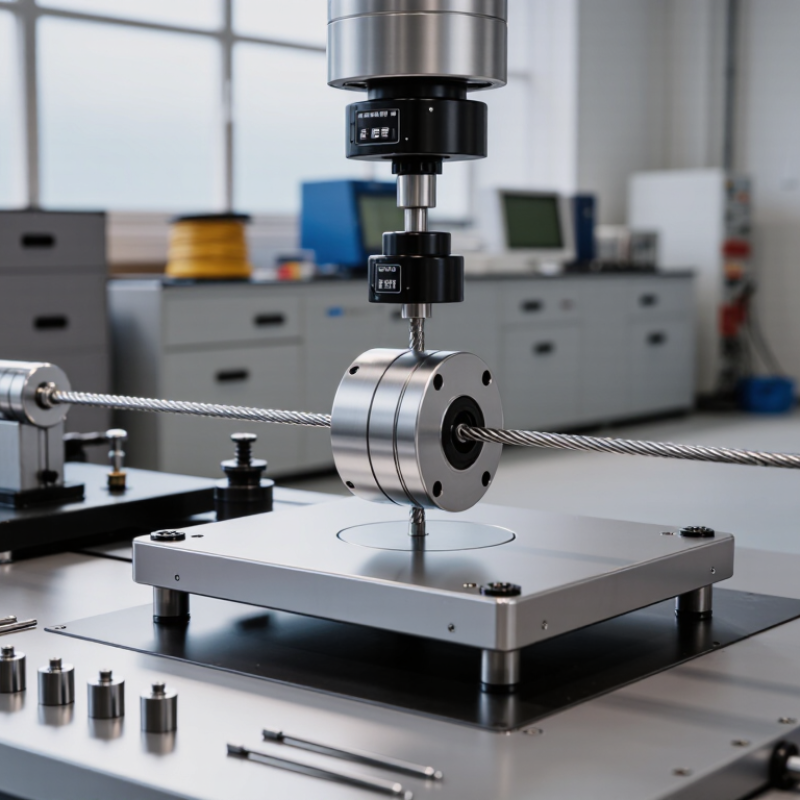
A pull force sensor measures tension when an object is pulled, stretched, or separated. It converts mechanical force into an electrical signal for monitoring or recording. In practical testing, technicians often connect it between a fixed point and a moving load. The sensor then reports force in newtons, pounds-force, or another selected unit.

Most pull force sensors use strain gauges bonded to a flexible metal element. When tension changes the element’s shape, the gauges detect tiny resistance changes. Internal electronics transform those changes into readable measurements. A screen may show the force directly. A data system can also record peaks, averages, and failure points.

The sensor’s capacity must match the real test. A device rated too high may miss small force changes. A device rated too low can overload quickly. That mistake is easy to make. Alignment matters too. Side loads, vibration, and loose connections can distort results. During production checks, I would inspect the mounting hardware, zero the sensor, and apply a known reference load. Calibration is not a one-time comfort. Temperature and repeated loading can slowly affect accuracy. Even careful testing has weak spots, especially when operators pull at changing speeds. For reliable decisions, record the test speed, mounting method, measurement range, and environmental conditions with every result.

How Pull Force Sensors Work and Are Rated

A pull force sensor measures tension by converting a small mechanical deformation into an electrical signal. In a common strain-gauge design, the sensing element flexes slightly when a cable or hook is pulled. Bonded gauges change resistance, and the instrument converts that change into a force reading. The movement is tiny. A display may show newtons, pounds-force, or kilograms-force, but the units should be checked before comparing results.

A sensor’s rated capacity is its maximum specified working force, not a target for every test. Select a range that comfortably covers the expected load while preserving useful resolution. Accuracy may be stated as a percentage of full scale or of the reading; those definitions can produce different results at low forces. Check the calibration certificate, overload limit, and required measurement direction. A sensor rated for tension should not automatically be assumed suitable for compression.

Mounting matters more than it may seem. Keep the pull line straight, use secure fixtures, and avoid side loading that can distort readings or damage the sensing element. Before testing, zero the instrument without a load, then apply force gradually and watch for drift. For repeatable results, record the sensor capacity, units, setup, and calibration date. Real setups are rarely perfect; a slightly misaligned hook can make clean-looking data less trustworthy.

Criteria for Comparing Pull Force Sensor Manufacturers

When comparing pull force sensor manufacturers, begin with the measurement task, not the catalog promise. Define the expected force range, loading direction, cycle rate, and installation space. A sensor rated for 1,000 newtons may perform poorly when measuring small changes near zero. Check accuracy, repeatability, hysteresis, resolution, and overload protection under the same conditions. Ask for calibration records linked to recognized national or international standards. Traceability matters. Without it, a precise-looking number may still be difficult to defend.

Practical experience also exposes differences hidden in technical sheets. Inspect housing materials, cable strain relief, connector sealing, and mounting instructions. For a factory floor, dust, vibration, cleaning fluids, and temperature swings can affect readings. Request test data from conditions resembling your application, such as repeated pulls at 60 cycles per minute. A credible manufacturer explains measurement limits instead of promising perfect performance. That honesty is useful. Still, published data may not reflect your fixture, operator technique, or software filtering.

Evaluate engineering support, response time, repair procedures, firmware stability, and spare-part availability. Clear drawings and serial-numbered certificates reduce mistakes during installation and audits. Ask whether custom ranges or digital outputs are tested individually. Compare total ownership cost, including recalibration, adapters, downtime, and training. The lowest purchase price can become expensive after one failed test. I would also review independent user evidence, not only testimonials supplied by the manufacturer. Some comparisons remain imperfect. Real-world trials often reveal more than polished specifications.

Criteria for Comparing Pull Force Sensor Manufacturers

Suggested evaluation weights for comparing suppliers. These are decision-making priorities, not measured scores for specific manufacturers.

Accuracy and calibration traceability are weighted most heavily. Also consider capacity range, overload protection, environmental suitability, output compatibility, documentation, and technical support.

Ten Leading Pull Force Sensor Manufacturers Worldwide

The ten leading pull force sensor manufacturers worldwide are distinguished by measurement accuracy, material quality, and practical engineering support. Their products commonly serve tensile testing, cable monitoring, packaging inspection, robotics, and industrial assembly. A dependable manufacturer should offer sensors for small loads, such as 10 newtons, and heavier applications exceeding 100 kilonewtons.

Clear calibration data matters.

Look for stainless steel construction, sealed connectors, and stable readings during repeated loading. In real testing, I would compare drift after several hundred cycles, not only the first laboratory result. Manufacturers with ISO-based quality systems, traceable calibration, and documented uncertainty provide stronger evidence of reliability.

Technical teams should also explain overload limits, temperature effects, wiring methods, and compatible signal conditioners. That support often prevents expensive installation mistakes.

No ranking is perfect. Application needs differ.

A compact sensor may suit a medical device, while a rugged tension link fits a crane system. I would question any manufacturer that reports accuracy without defining the test range or environmental conditions. Published specifications can look impressive but remain incomplete.

Factory testing, field experience, responsive service, and realistic delivery commitments offer a more balanced view of the ten leading global manufacturers.

Industries and Applications for Pull Force Sensors

Pull force sensors support quality checks wherever a component must resist being pulled, lifted, or separated. In automotive plants, technicians test seat-belt webbing, cable terminals, and bonded trim. A steady pull can reveal a weak crimp before a vehicle leaves production. Electronics workshops use compact sensors to measure wire-pull strength without damaging nearby connectors. Small differences matter.

Packaging and food-processing operations use pull testing to check seals, tabs, and flexible film. A sensor can record the force needed to open a pouch, helping teams compare production batches. In medical-device manufacturing, controlled tests assess tubing, catheter connections, and packaging seals. Test fixtures must match the part, or the readings may mislead. That detail is easy to overlook.

Construction-material labs test adhesive joints, fasteners, and protective coatings under tension. Research teams also use pull force sensors to study textiles, ropes, and composite materials. For useful results, operators should consider the force range, grip design, loading speed, and calibration schedule. A sensor alone cannot fix a poor test method. Even a neat reading deserves a second look when the sample slips, bends, or changes shape during testing.

10 Best Pull Force Sensor Manufacturers Worldwide? - Industries and Applications for Pull Force Sensors

Rank Manufacturer Profile Region Common Sensor Types Typical Force Range Typical Accuracy Industries Served Common Applications
1 Precision force-measurement specialist North America Inline tension sensors, S-beam load cells 10 N–50 kN About 0.1%–0.5% of full scale Aerospace, automotive, medical devices Material testing, cable tension monitoring, component pull testing
2 Industrial load-cell manufacturer Western Europe Threaded load cells, tension links 100 N–500 kN About 0.1%–1% of full scale Manufacturing, construction, energy Hoist-load monitoring, rigging checks, tensile testing
3 Test-and-measurement equipment producer East Asia Digital force gauges, motorized test-stand sensors 0.5 N–20 kN About 0.2%–1% of full scale Electronics, packaging, consumer goods Connector retention, peel testing, packaging seal testing
4 Custom transducer engineering manufacturer North America Miniature tension cells, custom strain-gauge transducers 1 N–100 kN About 0.1%–0.5% of full scale Robotics, research, industrial automation End-of-arm force measurement, test rigs, machine feedback
5 Weighing and force-sensing manufacturer Central Europe Tension load cells, load pins, force links 500 N–1 MN About 0.1%–1% of full scale Logistics, marine, heavy industry Crane-load measurement, mooring-line monitoring, lifting tests
6 Portable force-gauge manufacturer Japan Handheld force gauges, compact tension sensors 0.1 N–5 kN About 0.2%–1% of full scale Electronics, plastics, quality assurance Wire pull tests, spring tests, button and switch force checks
7 Industrial sensor and instrumentation producer South Korea Inline tension transducers, digital load cells 20 N–200 kN About 0.2%–1% of full scale Automotive, textiles, process manufacturing Web tension control, harness testing, production-line monitoring
8 Materials-testing system manufacturer United Kingdom and Europe Test-frame load cells, tensile-test transducers 1 N–300 kN About 0.1%–0.5% of full scale Materials laboratories, packaging, pharmaceuticals Elongation and tensile testing, peel and bond-strength tests
9 Heavy-duty force-monitoring manufacturer Australia and Oceania Wireless tension links, load pins, crane sensors 1 kN–2 MN About 0.5%–2% of full scale Mining, ports, utilities, offshore operations Winch and lifting-force monitoring, cable and structural-load checks
10 Regional automation and sensor manufacturer India and South Asia S-beam cells, tension load cells, force indicators 50 N–100 kN About 0.2%–1% of full scale Packaging, textiles, automotive suppliers Machine tension control, tensile quality checks, assembly testing

Force ranges and accuracy figures are indicative of commonly available product classes, not specifications for a particular manufacturer. Actual performance depends on sensor design, calibration, mounting, and operating conditions.