How to Choose 10kg Load Cells at the 139th Canton Fair?
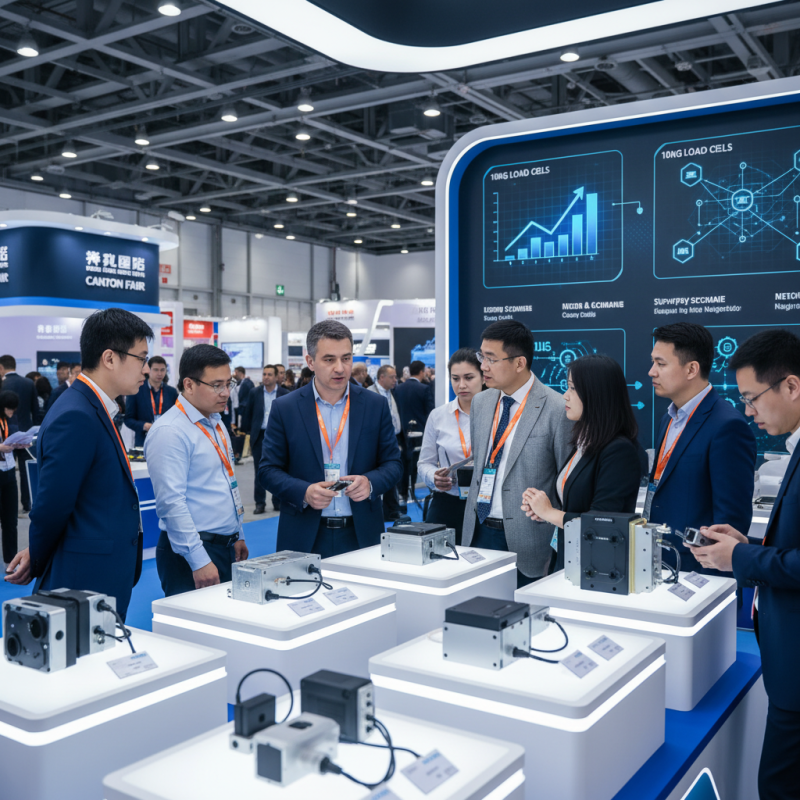
The 139th Canton Fair offers a unique opportunity to explore the 10kg Load Cell market. This fair showcases innovations in manufacturing and technology. As industry expert John Smith emphasizes, "Selecting the right load cell is crucial for accurate measurements."
In the realm of load cells, market data indicates a growing demand for precision instruments. Reports suggest that the market for load cells is expected to grow at a CAGR of 4.5% by 2027. The advancements in AI-driven supplier navigation at the Canton Fair streamline the search process. Buyers can filter suppliers with certifications like ISO and CE quickly.
However, the vast array of options can be overwhelming. Not every supplier meets high-quality standards, and some may have hidden issues. Therefore, careful evaluation is essential when choosing a 10kg Load Cell. The right choice not only affects accuracy but impacts overall project success. Keep these factors in mind while navigating the fair.
Understanding Load Cell Basics: Capacity, Types, and Applications
Choosing the right load cell is crucial for accuracy in weighing applications. A 10kg load cell can serve various purposes, including industrial scales and laboratory measurements. Understanding the basics is vital. Load cells convert force into an electrical signal, which is key for precise measurements. They come in different types, such as shear beam, compression, and tension load cells, each suited for specific applications.
Capacity is an essential factor when selecting a load cell. A 10kg capacity should meet the required accuracy for many applications. The industry recommends a margin of safety, often suggesting a load cell rated higher than the maximum weight it will measure. This helps prevent overloads and extends the life of the equipment. Incorrect load cell choice can lead to inaccurate data, affecting productivity.
Tips: Always check the calibration of the load cell. Proper calibration ensures that measurements are reliable. Consider environmental factors like temperature and humidity. These can impact the performance of load cells. Regularly inspect and maintain load cells to prevent unexpected errors. Inaccuracies can lead to costly mistakes, so attention to detail is critical.
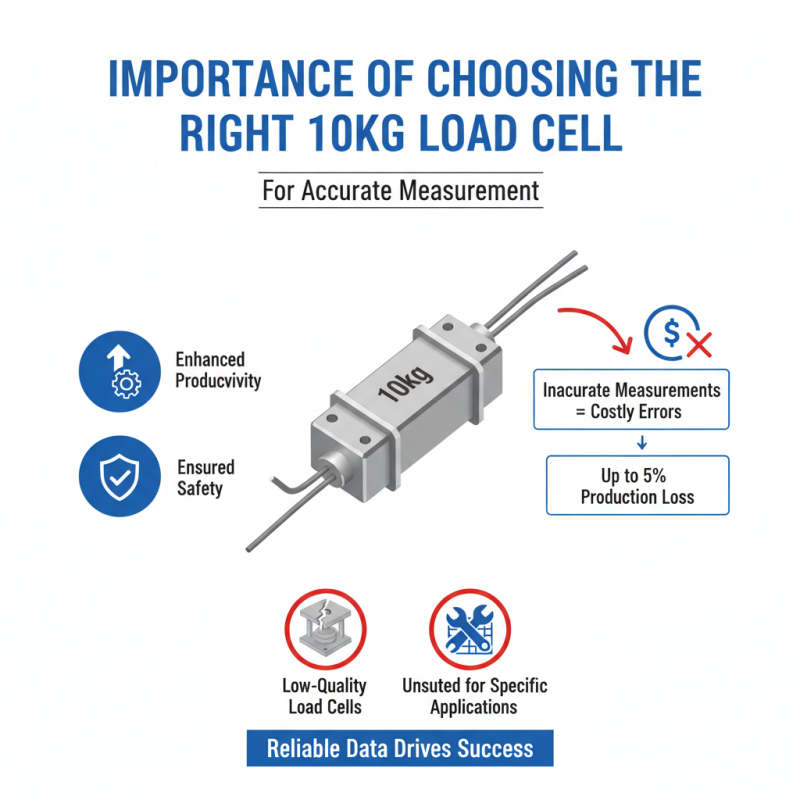
Importance of Choosing the Right 10kg Load Cell for Accurate Measurement
Choosing the right 10kg load cell is crucial for achieving accurate measurements in various industries. A load cell must provide reliable data to enhance productivity and ensure safety. A recent industry report indicates that inaccurate measurements can lead to costly errors, potentially reaching up to 5% of production costs. Such inaccuracies can stem from selecting low-quality load cells or those not suited for specific applications.
Accuracy is not just a technical requirement; it influences decision-making and operational efficiency. For instance, if a load cell consistently underreports weight, it can result in insufficient inventory for manufacturing processes. According to the International Society of Automation, operational efficiency can improve by 20-30% with precise load measurement systems. However, achieving this accuracy often requires careful evaluation of specifications, including sensitivity, temperature range, and environmental factors. Users often overlook these details, leading to regret down the line.
It’s essential to consider load cell installation and calibration. Poor installation can negate the advantages of even the best load cells. Some users fail to realize that proper alignment and load distribution are necessary for optimal function. Without addressing these factors, the promise of accurate results may remain unfulfilled. Balancing the choice of technology with practical application is the key to enhancing measurement precision.
Key Specifications to Consider: Sensitivity, Linearity, and Hysteresis
Choosing a 10kg load cell involves careful consideration of specific key specifications.
Sensitivity is a crucial factor. It measures how responsive the load cell is to changes in weight. A highly sensitive load cell will provide accurate readings even with slight weight variations.
Linearity is another essential specification. It ensures the output signal is proportional to the load applied. A linear load cell maintains accuracy across the entire weight range. If the relationship is not linear, it can lead to errors in measurements. This is a critical aspect that should not be overlooked.
Hysteresis should also be analyzed. It refers to the difference in readings when increasing and decreasing the load. A lower hysteresis value indicates better reliability. Load cells with high hysteresis might lead to confusion during data interpretation.
Tips: Always analyze calibration methods when selecting load cells. Ensure the manufacturer provides a clear calibration procedure. Compare multiple load cells to find the best fit for your application. Don't hesitate to ask questions. Gaining clarity can save you time and money in the long run.
Evaluating Load Cell Manufacturers: Quality Standards and Certifications
When attending the 139th Canton Fair, evaluating load cell manufacturers is crucial. Quality standards and certifications play a significant role in the selection process. Look for manufacturers with international certifications. ISO and CE markings can indicate a level of quality assurance.
Tips: Always ask for the manufacturer's certifications. A credible supplier should easily provide documentation. Transparency is vital.
Not all manufacturers maintain the same quality. Some may cut corners to reduce costs. Inspecting samples before committing is smart. Check for accuracy and reliability. Ensure that their load cells meet the necessary performance standards. Don't overlook this vital step.
With many options, focus on the manufacturer’s track record. Customer reviews can provide insights into their reliability. Pay attention to communication. A responsive supplier often reflects good service. Consider their after-sales support. Strong support can save you from potential issues down the road.
Trends in Load Cell Technology: Innovations and Future Outlook at Trade Fairs
At the 139th Canton Fair, innovation in load cell technology will be prominent. Load cells, essential for many industries, continue to evolve. These technological advancements enhance accuracy, speed, and efficiency. New materials are being developed, resulting in lighter and more reliable devices. The emphasis on digital integration is also strong. Smart load cells offer real-time monitoring and data analytics.
Tips: When exploring load cells, focus on sensor materials. Materials affect durability and performance. Also, consider the environment in which the load cell will operate. Harsh conditions require robust solutions.
The future outlook for load cells includes increased automation. This shift allows for better user experience and operational efficiency. However, as technology progresses, some products may not meet expectations. Testing different models is critical. Be wary of overly idealized claims. Understand the capabilities and limitations of each option.
Tips: Look for demonstrations at the fair. Observing how load cells perform in real-time can aid your decision. Don't hesitate to ask questions about product support and warranty details.

 sales@loadcellsensor.com