Why Choose the Best Pull Force Sensor for Your Needs?
In today's rapidly evolving industrial landscape, selecting the right Pull Force Sensor is crucial for accuracy and reliability. Dr. Emily Carter, a leading expert in sensor technology, emphasizes, "The right sensor can be the difference between success and failure in precision applications." Her insights underline the significance of choosing a sensor that meets your specific requirements.
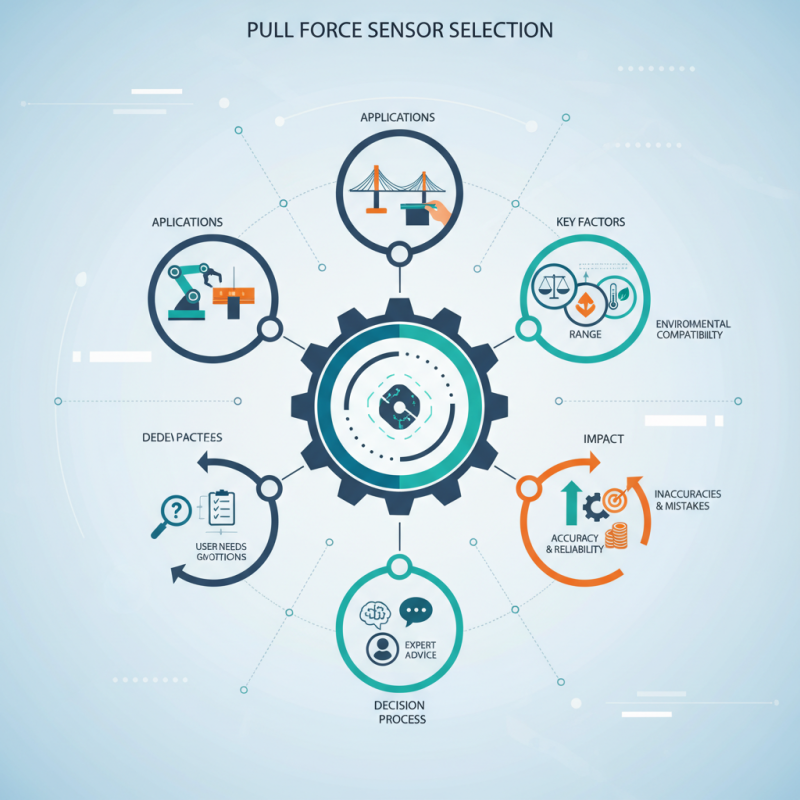
Pull Force Sensors play an essential role in various applications, from material testing to robotics. These sensors measure the force exerted while pulling, allowing engineers to gather valuable data. Yet, not all sensors are created equal. Factors such as calibration, range, and environmental compatibility greatly impact their performance.
Choosing a Pull Force Sensor requires careful consideration. Users must balance needs against available options. Reflection is often necessary, as the right choice directly affects project outcomes. An ill-suited sensor can lead to inaccuracies and costly mistakes. Hence, understanding your application and seeking expert advice is essential for informed decisions.
Understanding Pull Force Sensors: Definition and Functionality
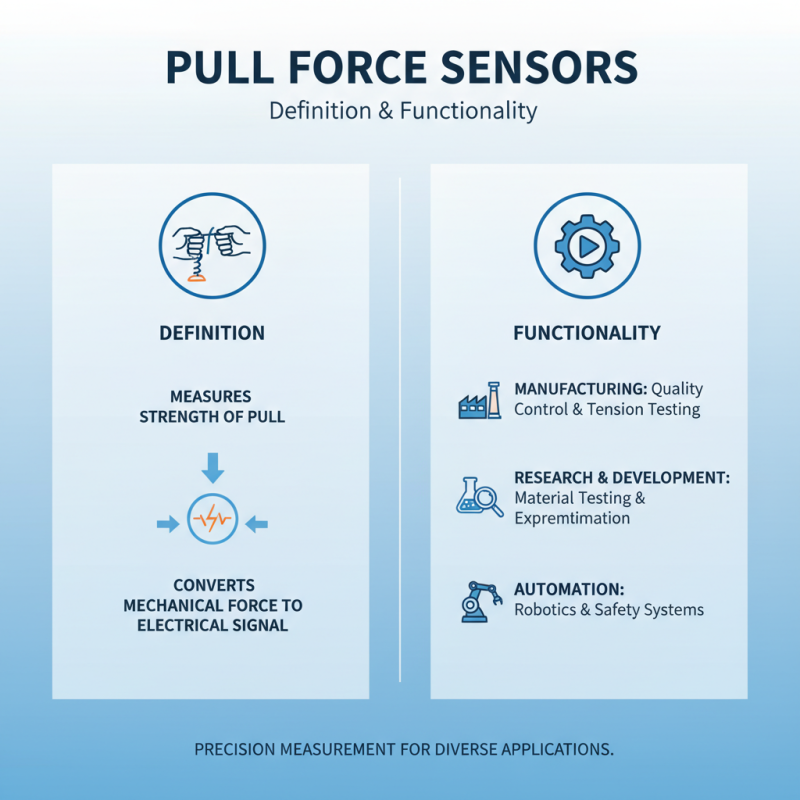
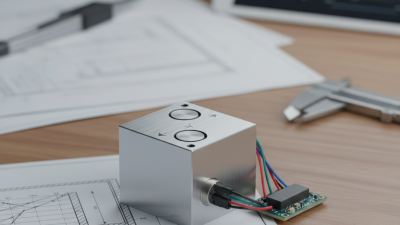
Pull force sensors play a crucial role in measuring the strength of pull exerted on an object. These sensors convert mechanical force into an electrical signal, allowing for precise measurements. Understanding their functionality is essential for various applications, from manufacturing to research and development.
The sensors come in different types, including strain gauge and load cells. Each type operates on unique principles, yet they all serve the same fundamental purpose. Knowing the specific application helps in selecting the right sensor. For instance, a sensor used in a tensile test needs to withstand considerable loads compared to one used in delicate tasks.
Choosing the best pull force sensor involves understanding both technical specifications and application needs. Users often overlook these details, leading to mismatched equipment and unreliable results. Hence, careful consideration of load capacity, sensitivity, and accuracy is necessary. Evaluating these factors helps avoid complications down the line and ensures that the sensor performs effectively in its intended role.
Key Factors to Consider When Choosing a Pull Force Sensor
Choosing the right pull force sensor is critical for accurate measurements. Several key factors should guide your decision. One important aspect is the sensor's measurement range. Ensure it aligns with your specific application. A sensor with too narrow a range might not capture the full spectrum of forces. On the other hand, one with an excessively wide range could lead to inaccuracies.
Another factor is the sensitivity and accuracy of the sensor. High sensitivity allows for detecting minor force changes. This feature is vital in sensitive applications. Additionally, consider the durability and environmental resistance. Sensors may encounter harsh conditions. Make sure they can withstand humidity, dust, or temperature fluctuations without compromising performance.
Lastly, evaluate the ease of integration with your existing systems. Compatibility plays a significant role in data acquisition. Look for sensors that offer straightforward installation and clear documentation. Reflecting on these details is essential. A hasty choice can lead to future challenges. Taking the time to analyze these factors can improve your project's outcome.
Why Choose the Best Pull Force Sensor for Your Needs? - Key Factors to Consider When Choosing a Pull Force Sensor
| Sensor Type |
Max Pull Force |
Accuracy |
Response Time |
Operating Temperature Range |
Connection Type |
| Strain Gauge |
1000 N |
±0.5% |
10 ms |
-40 to 85 °C |
USB |
| Load Cell |
2000 N |
±0.2% |
5 ms |
-10 to 70 °C |
Analog |
| Tension Sensor |
500 N |
±1.0% |
20 ms |
-20 to 60 °C |
Wireless |
| Optical Sensor |
1500 N |
±0.3% |
1 ms |
0 to 50 °C |
Ethernet |
Types of Pull Force Sensors and Their Applications
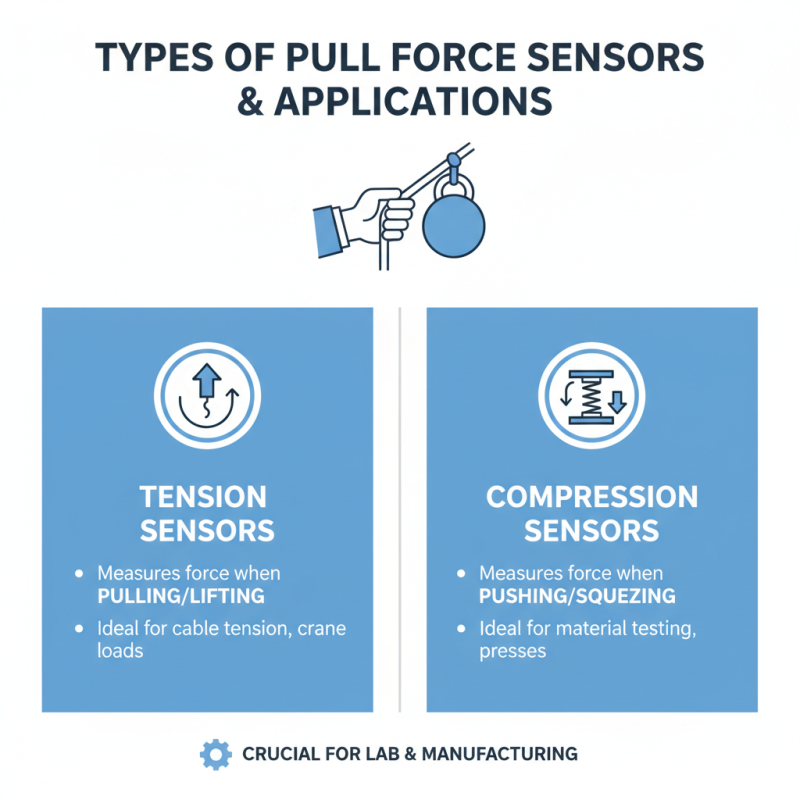
Pull force sensors come in various types, each designed for specific applications. These sensors measure the force exerted when pulling or lifting. Tension and compression sensors are among the most common. Tension sensors gauge force applied in a pulling direction, while compression sensors measure the force in the opposite direction. Both types are crucial in testing materials in labs or during manufacturing processes.
Another type is the load cell, which can provide precise readings in a compact design. Load cells are widely used in industrial scales and robotics. Their accuracy helps ensure quality in production and safety in operations. Strain gauges are also popular; they deform under load, translating this change into measurable electrical signals. This technology finds use in areas such as automotive testing and load monitoring.
Despite their reliability, choosing the right sensor isn't straightforward. Not every sensor fits all scenarios. Factors like measurement range, environment, and compatibility must be considered. Some sensors may struggle with extreme temperatures. Others might lack the sensitivity needed for small-scale applications. Understanding these nuances is vital. It ensures the chosen sensor meets your specific needs while avoiding costly mistakes.
Comparing Accuracy, Sensitivity, and Range in Pull Force Sensors
Selecting the right pull force sensor is crucial for precise measurements.
Accuracy in these sensors represents how close a measurement is to the true value.
High accuracy ensures that your applications, whether in manufacturing or research, rely on trustworthy data.
A sensor that consistently provides accurate readings can significantly reduce errors.
However, achieving high accuracy may also increase complexity in setup and calibration.
Sensitivity is another key factor to consider.
This measure indicates how responsive a sensor is to changes in force.
A highly sensitive sensor captures even minor variations.
Yet, extreme sensitivity can lead to false readings from environmental noise.
Users often face a trade-off between sensitivity and stability.
Finding the right balance might require tweaking settings as needed.
Range refers to the limits within which a sensor can effectively measure force.
A broad range allows for versatility in applications.
However, sensors with an extensive range may sacrifice precision at specific points.
Users must understand their specific requirements to select the most suitable sensor.
This means considering both the high and low ends of measurement.
Choosing the right pull force sensor is about understanding these factors.
Cost Considerations: Finding the Best Value for Your Needs
When selecting a pull force sensor, cost considerations play a crucial role. Numerous industry reports highlight that choosing a sensor based on its price alone can lead to suboptimal performance. A study from the Sensor Manufacturers Association reveals that low-cost sensors often lack necessary reliability, leading to increased maintenance costs over time.
Investing in quality pull force sensors can yield long-term savings. For example, the average lifespan of a high-quality sensor is reported to be up to five years longer than cheaper models. This means fewer replacements and less downtime, which can translate into significant savings. Ensure you balance cost against features that align with your specific requirements.
Tips: Always compare specifications and user reviews before making a decision. Check for warranties and support, as they are indicators of a reliable product. Consider the total cost of ownership rather than just the initial purchase price. Ensure your chosen sensor matches your operational needs to avoid performance issues later.
Pull Force Sensor Cost Considerations
This chart illustrates the cost variations among different pull force sensor models, helping you evaluate which model offers the best value for your specific needs.

 sales@loadcellsensor.com