How to Choose the Right Miniature Load Sensor for Your Project?
When embarking on a project that requires precision measurement, selecting the right Miniature Load Sensor is crucial. Industry expert Dr. Emily Foster, a leading researcher in sensor technology, once stated, "The right sensor can make or break your project." Her insight underscores the importance of careful consideration in the selection process.
Miniature Load Sensors are versatile devices used in various applications, from robotics to medical devices. Their compact design allows for integration into spaces where larger sensors cannot fit. However, not every sensor is suitable for every project. Factors such as load capacity, environmental conditions, and response time come into play.
Each project is unique, and a common pitfall is assuming that a one-size-fits-all solution exists. Testing different sensors may reveal unexpected challenges. Manufacturers offer various models with differing specifications; understanding these details is key. Choosing the wrong sensor can lead to inaccuracies and even project failure, underscoring the need for thorough research and reflection on project requirements.

Understanding the Basics of Miniature Load Sensors
Miniature load sensors play a crucial role in various applications, from robotics to industrial automation. Understanding their basic components is key when selecting the right sensor for your project. These devices typically consist of a sensing element, electronics, and a calibration mechanism. The sensing element detects force or weight, converting physical changes into electrical signals. This leads to accurate measurements, but only if the sensor is properly calibrated.
It's essential to consider the environment in which the sensor will operate. Will it be exposed to moisture or high temperatures? These factors can affect performance. Additionally, the load sensor's capacity must match your project's requirements. Overloading a sensor can lead to inaccuracy or damage. Moreover, the mounting method is vital. If the sensor is not securely installed, readings will be unreliable. Testing is often overlooked, but it's necessary to ensure accuracy in real-world scenarios.
When assessing miniaturized options, pay attention to sensitivity and response time. A highly sensitive sensor may provide more precise measurements, but it could also be more susceptible to noise. Balancing these aspects is crucial. Reflect on your project's goals when choosing a miniature load sensor. Don't rush the decision-making process. Take your time to gather data, compare specifications, and consult experts if needed.
Evaluating Specifications: Key Features to Consider
When choosing a miniature load sensor, understanding the key specifications is crucial. Key features can influence your project’s success significantly. Load capacity is one of the first factors to assess. Look for a sensor that matches your maximum expected load. Too low a rating can lead to failure, while too high may lack the precision needed.
Another important aspect is the sensor's sensitivity. High sensitivity allows for better load detection. If your project requires precise measurements, this is essential. Consider the environment where the sensor will operate. Conditions such as temperature, humidity, and vibration may affect its performance. Choosing a sensor rated for your specific conditions will enhance reliability.
Tips: Always review datasheets carefully. Specifications can vary significantly amongst sensors. Testing the sensor in your environment can provide invaluable insights. Don't overlook calibration; it can impact accuracy. Additionally, evaluate the mounting options available. Proper installation can influence the sensor's performance and longevity.
Miniature Load Sensor Specifications Comparison
Determining the Load Capacity for Your Application
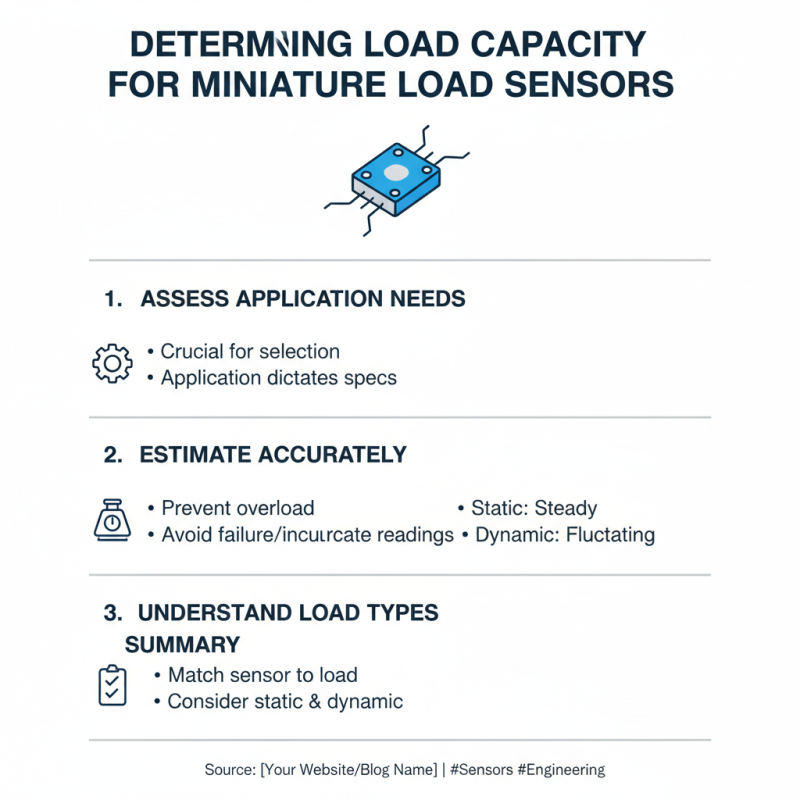
When selecting a miniature load sensor, understanding the load capacity is crucial. Your application will dictate the required specifications. Accurately estimating the load helps prevent sensor overload. An overloaded sensor could lead to failure and inaccurate readings. Familiarize yourself with both static and dynamic load requirements. Static loads are steady, while dynamic loads may fluctuate.
Some projects may need sensors that can handle unexpected spikes. A sensor rated for 100 kg might not be suitable if your peak load is 120 kg. Think about the worst-case scenarios your project might encounter. A slight overestimation can provide a safety buffer. However, too much overestimation may lead to additional costs and complexity.
Evaluate the operating conditions, such as temperature and environmental factors. These factors affect sensor performance. For example, humidity may impact sensor readings. Always consult the sensor’s documentation for insights into its limits and capabilities. Gathering this information helps make an informed decision. Yet, it's important to remember that perfect data may not always be available. Engage with experts to fill gaps in your knowledge. Consider their advice, but also trust your instincts as you navigate this process.
Assessing Environmental Factors and Sensor Compatibility
Choosing the right miniature load sensor involves more than just specifications. Environmental factors play a significant role in performance. For example, temperature fluctuations can affect sensor accuracy. High humidity or exposure to dust can impact the sensor's reliability.
When assessing sensor compatibility, it’s crucial to examine the materials used. If your project involves corrosive environments, ensure that the sensor materials can withstand such conditions. For instance, stainless steel may be necessary for durability. It’s also vital to consider the sensor's placement. Sensors located near heat sources may yield inaccurate readings.
Testing different setups can reveal unexpected challenges. You may find that a certain sensor works well in theory but fails in real-world applications. Continuous monitoring and recalibration might be essential. Evaluate your findings and adjust as necessary. Each project is unique, creating a need for custom solutions. Understanding all these factors leads to a more successful implementation.
How to Choose the Right Miniature Load Sensor for Your Project? - Assessing Environmental Factors and Sensor Compatibility
| Sensor Type |
Max Load (kg) |
Output Type |
Operating Temperature (°C) |
Environmental Protection Rating |
| Load Cell |
50 |
Analog Voltage |
-10 to 60 |
IP65 |
| Strain Gauge |
30 |
Digital |
-20 to 70 |
IP67 |
| Tension Sensor |
40 |
Analog Current |
-5 to 55 |
IP54 |
| Compression Sensor |
70 |
Wireless |
0 to 50 |
IP68 |
Exploring Different Types and Technologies of Load Sensors
When exploring different types and technologies of load sensors, it's essential to consider their specific applications. Strain gauge load cells are common for measuring weight in static applications. They work by converting mechanical stress into an electrical signal. Their accuracy makes them reliable for general use in various projects. However, environmental factors can influence their performance. If not calibrated or shielded properly, they may produce inconsistent results.
Another option is capacitive load sensors. These sensors operate on the principle of measuring changes in capacitance due to load changes. They're often lighter and can be more sensitive than strain gauges. However, their performance can be affected by humidity and temperature. This makes careful environmental assessment crucial before choosing this type.
Piezoelectric load sensors are also worth mentioning. They excel at measuring dynamic loads. These sensors generate electricity in response to applied stress. They vary in sensitivity and speed. While they work well for impact measurements, their limitations include potential drift in static applications. Evaluating the specific needs of your project will lead you to the most suitable choice.

 sales@loadcellsensor.com