sales@loadcellsensor.com

7 Tips to Choose the Best 2 Axis Force Sensor
Choosing the right 2 Axis Force Sensor is not simply a matter of comparing prices or advertised accuracy. Engineers must understand how the sensor will behave inside a real machine, under real loading conditions. A compact robotic gripper, for example, may experience vertical force, sideways force, vibration, heat, and repeated impacts within seconds. Each detail affects measurement quality.
Measurement pioneer Lord Kelvin famously said, “When you can measure what you are speaking about, and express it in numbers, you know something about it.” His principle remains highly relevant to modern force sensing. A reliable 2 Axis Force Sensor should produce useful data, not merely impressive specifications. Buyers need to examine force ranges, overload protection, sensitivity, resolution, mounting design, environmental sealing, and signal compatibility. Small differences matter.
This guide presents seven practical tips for selecting a suitable 2 Axis Force Sensor. It considers application loads, installation space, calibration requirements, response speed, and long-term stability. The process is not always clean. Sometimes a sensor with higher accuracy performs poorly because its range is incorrectly selected. Sometimes a cheaper model works well in testing but drifts during continuous operation. That uncomfortable possibility deserves attention.
Look beyond the datasheet. Ask how the sensor behaves after thousands of cycles, when cables bend, or when mounting surfaces are imperfect. Request test data, calibration records, and technical support details. A thoughtful choice may take longer. It can prevent expensive redesigns later.
Define the Measurement Requirements for a Two-Axis Force Sensor
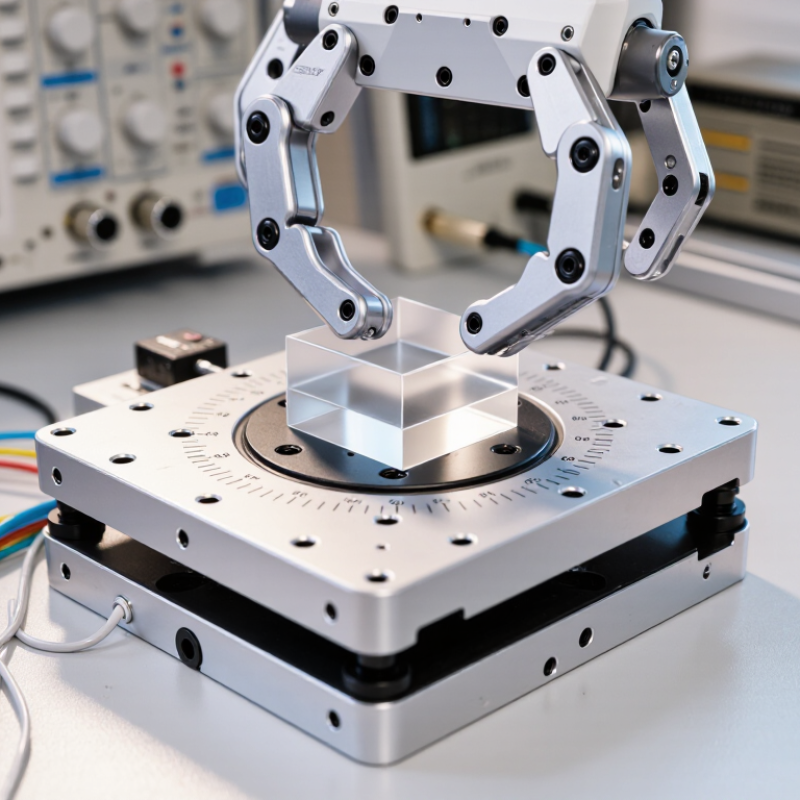
Tip 1: Define the measurement requirements before selecting a two-axis force sensor. State the expected force range for each axis, including normal operating loads and short overloads. A sensor rated too closely to the maximum load may lose accuracy. A sensor with excessive capacity may hide small force changes. Measure the real load path, not only the force shown in a design drawing. Small mounting errors can create unexpected cross-axis forces.
Tip 2: Clarify how the sensor will be used. Will it measure compression, tension, shear, or two forces at the same time? Record the required resolution, accuracy, sampling rate, and response time. Also check whether the force direction changes during operation. In practical testing, the most useful specifications are often overlooked. Cable movement, fixture stiffness, and vibration can affect readings. A clean laboratory result may not represent production conditions.
Tip 3: Match the sensor to its environment and installation method. Check temperature, humidity, dust exposure, available space, connector position, and mounting hardware. Confirm whether calibration data covers both axes and their interaction. This matters when force on one axis influences the other reading. Ask for traceable test information and repeatability results. Do not rely on one impressive number. A compact sensor may appear ideal, but installation access could make routine calibration difficult. That weakness deserves honest consideration.
Define the Measurement Requirements for a Two-Axis Force Sensor
The chart shows representative full-scale force requirements for common two-axis measurement tasks. Select a sensor whose X- and Y-axis capacity, resolution, accuracy, overload protection, and sampling rate match the real operating conditions.
Values are representative engineering design targets expressed in newtons (N). A practical selection normally includes additional capacity above the maximum expected load to avoid saturation and mechanical damage.
Compare Sensor Ranges, Accuracy, Resolution, and Sensitivity
7 Tips to Choose the Best 2 Axis Force Sensor
Match the measuring range to real loads, not imagined peaks. A range that is too wide can hide small forces. A range that is too narrow may saturate during impact. Check overload capacity separately. It is not the same as usable range. Compare accuracy across both axes, temperature points, and loading directions. ISO 376:2011 classifies force-measuring performance through defined error limits, but those limits do not automatically describe two-axis cross-talk.
Review resolution in actual electrical noise conditions. A sensor may advertise thousands of counts, yet vibration, amplifier noise, and drift can erase several counts. Sensitivity should be checked in mV/V, mV/N, or another clearly stated unit. Confirm the excitation voltage behind that number. NIST Technical Note 1297 recommends reporting expanded uncertainty with a coverage factor of k=2, which commonly represents about 95% coverage. That figure is useful, but only when the uncertainty budget is honestly built.
Test both axes independently, then apply combined loads. Cross-axis error can appear only when force and torque interact. Ask for repeatability, hysteresis, thermal drift, and calibration conditions. ISO 17025 practices also highlight traceability and competent measurement procedures. A neat datasheet can still mislead. In bench work, imperfect alignment often becomes the hidden error. Leave margin for mounting stiffness, cable movement, and temperature changes. The cheapest sensor is not always the lowest-cost choice.
Evaluate Environmental Protection and Mechanical Durability
Choosing the best 2 Axis Force Sensor requires more than comparing force ranges. Environmental protection and mechanical durability often decide whether the sensor performs reliably in daily operation.
Check its protection against dust and water. An IP rating tested under IEC 60529 gives useful evidence, but it is not a complete guarantee. Consider temperature changes, condensation, cleaning fluids, and cable entry points. A sealed housing can still fail when moisture travels through a damaged cable jacket. In outdoor equipment, salt exposure may also corrode connectors and mounting hardware. Ask for test conditions, not only rating numbers. Small details matter.
Mechanical durability deserves equal attention. Review overload capacity, fatigue life, vibration resistance, and allowable off-axis loading. A sensor may measure two force directions, yet poor alignment can create unwanted stress. Use rigid mounting surfaces and follow the recommended bolt torque. During evaluation, run repeated load cycles near the expected working range. Then check zero drift and sensitivity changes. Field experience shows that occasional overloads are more damaging than many engineers expect. They may not cause immediate failure. That is the problem.
Look for temperature-cycle results and calibration records from controlled testing. Independent verification strengthens confidence, though test samples may not match production units perfectly. I would also inspect the connector after vibration testing. It is easy to overlook. A durable sensor should survive real installation habits, not just ideal laboratory conditions. Reconsider the choice if protection data is vague or mechanical limits are difficult to interpret.
Check Interface Compatibility, Calibration, and Installation Needs
Choosing a two-axis force sensor starts with interface compatibility, not maximum load. Confirm signal type, excitation voltage, connector pinout, sampling rate, and communication protocol. A mismatch can create unstable readings or damage the acquisition unit. The World Robotics 2024 report recorded 541,302 industrial robot installations in 2023. That growth increases the need for sensors that integrate cleanly with controllers and inspection systems.
Calibration deserves equal attention. Select a sensor with traceable calibration records and documented uncertainty. ISO 376 defines methods for calibrating force-proving instruments, including repeatability, reproducibility, zero return, and creep. Ask whether the certificate covers both axes, temperature conditions, and cross-axis sensitivity. A factory certificate may not represent your assembly. I would still verify the sensor after mounting. Small fixtures can change force distribution.
Installation details often decide real-world accuracy. Use a stiff, flat mounting surface and align the applied force with the sensing axes. Check bolt torque, preload, cable strain relief, and nearby vibration sources. Leave room for thermal expansion. The cable should not pull on the connector. It sounds basic. It is often missed. A sensor can pass a bench check and fail inside a moving mechanism. My first selection would be questioned if the interface, calibration range, and mounting geometry were reviewed separately instead of as one system.
Assess Total Cost, Supplier Support, and Long-Term Reliability
7 Tips to Choose the Best 2 Axis Force Sensor
Assess Total Cost, Supplier Support, and Long-Term Reliability
A low purchase price can hide expensive problems. Check calibration, mounting hardware, cables, software, shipping, and replacement costs. Ask for a clear total-cost estimate over three to five years. Confirm the sensor’s rated load, overload limit, accuracy, resolution, and cross-axis sensitivity. These details affect real measurements, not just catalogue comparisons.
Look for traceable calibration records, preferably from a competent laboratory. Verify operating temperature, protection rating, connector strength, and expected service life. Request sample test data from conditions similar to your application. A supplier should explain installation, signal conditioning, calibration intervals, and failure procedures in practical language. Slow answers are warning signs. Support matters.
Ask about technical training, spare availability, repair times, and firmware compatibility. Confirm whether the supplier can provide replacement units without changing your equipment design. I once focused too heavily on accuracy and overlooked cable strain relief. That small mistake caused unstable readings during repeated testing. My checklist is better now, but it is not perfect. Leave room for field feedback. Review warranty exclusions carefully, especially for overload damage and harsh environments. A reliable supplier shares limitations instead of promising flawless performance.
Related Posts
-
Navigating Industry Standards for Best Weight Transducer and Its Challenges
-
How to Choose the Right Hollow Load Cell?
-

How to Choose the Best Load Sensor 50kg for Your Needs?
-
Exploring the Future of Load Cells: Innovations Beyond the Best Bending Beam by 2025
-
How to Choose the Right Rigging Load Cell for Your Needs?
-
Top 10 Benefits of Using a 1kg Load Cell in Your Projects?