Top 10kg Load Cell Options for Your Business Needs?
In the competitive world of industrial applications, choosing the right load cell is critical. Among various options, the 10kg load cell stands out for its versatility. According to a report by the International Society of Weighing, the demand for precise weighing instruments is projected to grow by 7% annually. This growth emphasizes the need for businesses to select reliable equipment.
Dr. Emily Hart, a leading expert in load cell technology, states, “A 10kg load cell is essential for accurate measurements in many industries.” Her insights resonate with professionals who acknowledge that accuracy can significantly impact operational efficiency.
Selecting a suitable 10kg load cell requires consideration of various factors. These include the environment it operates in and the specific application. There is often confusion regarding load cell types, capacities, and features. Some users may overlook essential specifications, impacting performance. Reliable choices become increasingly important as businesses seek to meet growing demands for accuracy and efficiency.
Understanding Load Cells: Definition and Application
Load cells are vital components in various industries, enabling precise measurement of weight and force. A load cell converts mechanical force into an electrical signal, making it essential for applications ranging from industrial scales to aerospace testing. According to a recent report by MarketsandMarkets, the global load cell market was valued at over $3 billion in 2022, with a projected growth rate of 4.5% through 2027. This highlights the increasing reliance on accurate weight measurement across sectors.
Understanding the application of load cells helps businesses enhance efficiency. They are used in monitoring product weight during manufacturing and logistics. Load cells improve product quality by ensuring exact measurements during processing. In critical environments, however, not all load cells function flawlessly. Variability in temperature and environmental conditions can affect accuracy. A 2023 survey revealed that 10% of businesses reported discrepancies due to external factors. This emphasizes the need for careful selection and regular calibration of load cells to maintain reliability.
Moreover, choosing the right load cell depends on specific applications. For example, some industries may require high precision, while others prioritize durability. With various types available, including strain gauge and piezoelectric load cells, understanding the specific needs of your business is crucial. Inadequate knowledge can lead to costly errors. Therefore, investing time in research is essential for optimal performance and reliability in weight measurement.
Load Cell Options Comparison
Key Factors to Consider When Selecting a 10kg Load Cell
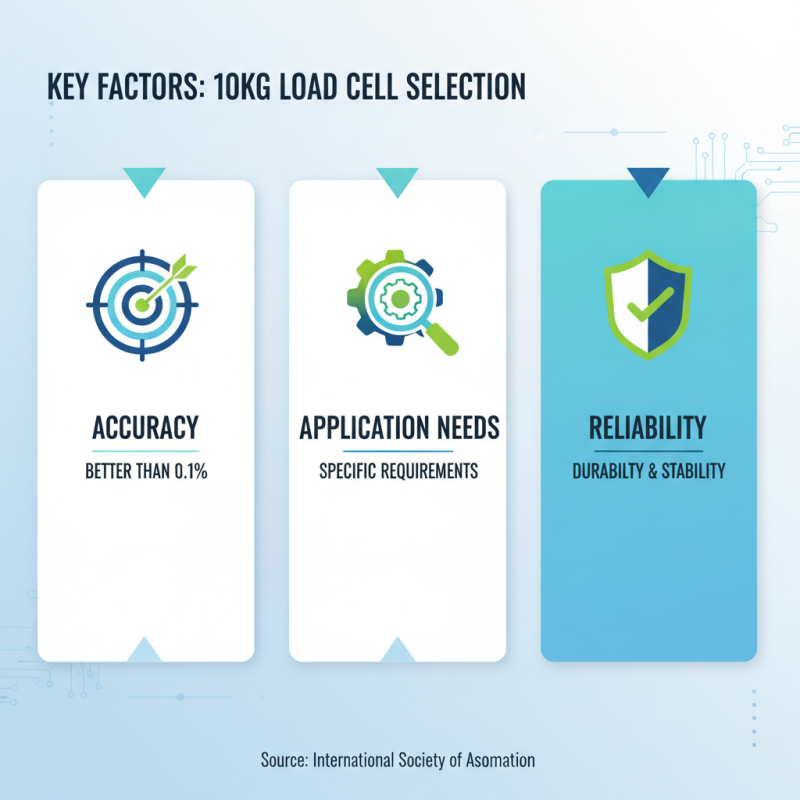
When selecting a 10kg load cell, several key factors emerge. Accuracy is paramount. A report from the International Society of Automation indicates that achieving a measurement accuracy of better than 0.1% is critical for many applications. Businesses should assess their specific requirements before making a decision.
Another essential factor is environmental resistance. Load cells often operate in challenging conditions, including temperature fluctuations and humidity. The need for a wide operating temperature range—usually from -10°C to 40°C—ensures consistent performance. While many load cells claim ruggedness, not all withstand harsh environments equally.
Finally, consider the load cell's compatibility with existing systems. Proficiency in interfacing with various data acquisition systems matters greatly. Reports highlight that poor integration often leads to data inconsistency, which undermines reliability. Businesses must scrutinize technical specifications closely to avoid miscalculations or operational delays.
Top 10 Recommendations for 10kg Load Cells for Businesses
When selecting a load cell for business applications, precision and reliability are crucial. In various sectors such as manufacturing, logistics, and food processing, a 10kg load cell serves multiple purposes. It can measure weight, control processes, and improve efficiency. According to industry reports, around 65% of businesses report better operational efficiency with accurate weighing solutions.
The technology behind load cells has evolved significantly. Many contemporary models feature advanced strain gauge technology, ensuring high accuracy within a small weight range. Some data indicate that load cells can achieve accuracy levels of up to ±0.01% of the full scale. However, it's important to keep in mind the challenges of temperature fluctuations and environmental factors that might affect readings. Regular calibration is essential to maintain reliability.
Moreover, businesses often overlook the installation process. Improper setup can lead to miscalculations and operational disruptions. Investing time in training staff and understanding the equipment can mitigate errors. Organizations must consider both upfront costs and long-term maintenance. This careful evaluation helps ensure that the chosen load cells align perfectly with their operational needs. Ultimately, reliable load cells can propel a business towards enhanced productivity and quality management.
Comparing the Performance of Different Load Cell Brands
When comparing various load cell brands, it's essential to assess their performance based on specific factors. Accuracy is a key element. Some load cells can measure even minor weight changes. This is crucial for businesses where precision matters greatly. Features, such as temperature stability, can also impact accuracy.
Durability is another factor to consider. Load cells must withstand heavy use in industrial settings. Some brands offer rugged designs that resist wear and tear. However, not all options are created equal. Some may fail under extreme conditions, leading to costly downtimes. Additionally, ease of calibration can vary among different load cell types. A simpler calibration process can save valuable time.
Support and service are often neglected but vital. Responsive customer service can make a difference when technical issues arise. Consult user reviews to gauge reliability. Many organizations rely on load cells for critical operations. It's important to choose wisely, as this decision can directly affect business efficiency and productivity.
Top 10kg Load Cell Options for Your Business Needs
| Load Cell Type |
Capacity (kg) |
Accuracy (%) |
Output Sensitivity (mV/V) |
Temperature Range (°C) |
Material |
| Shear Beam |
10 |
±0.03 |
2.0 |
-20 to 60 |
Aluminum |
| Compression |
10 |
±0.02 |
1.5 |
-10 to 70 |
Stainless Steel |
| Tension |
10 |
±0.05 |
2.0 |
-20 to 50 |
Aluminum |
| S-Beam |
10 |
±0.03 |
2.0 |
-30 to 80 |
Stainless Steel |
| Load Button |
10 |
±0.02 |
1.0 |
-20 to 50 |
Aluminum |
Installation and Calibration Tips for 10kg Load Cells
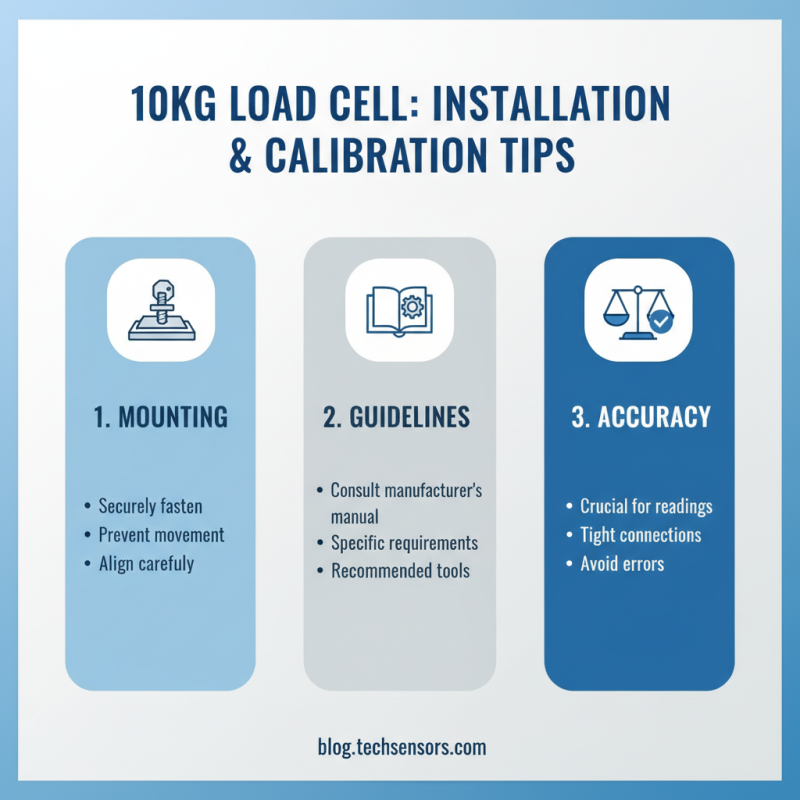
When installing a 10kg load cell, proper calibration is crucial for accurate measurements. Start by ensuring the load cell is securely mounted. A stable installation prevents movement, which can affect readings. Check the manufacturer's guidelines for specific mounting requirements. Using the correct tools ensures tight connections and alignment. Don’t rush this step; any misalignment may lead to errors.
Calibration is an essential process. Begin by applying known weights to the load cell. This method helps you verify its accuracy. Adjust the calibration settings based on the readings you obtain. Document your calibration data for future reference. It’s common to experience discrepancies during this phase, so patience is vital. Moreover, consider environmental factors that may influence performance, such as temperature and humidity. Regularly recalibrate to maintain reliability, especially in changing conditions. Adopting a structured approach to installation and calibration will significantly enhance the performance of your load cell system.

 sales@loadcellsensor.com