2026 How to Choose the Right Load Sensor?
Choosing the right Load Sensor in 2026 requires more than comparing price tags or advertised capacity. The correct choice depends on the application, installation environment, measurement accuracy, and maintenance plan. A sensor under a grain hopper faces dust, vibration, moisture, and uneven loading. A sensor inside a clean laboratory faces different risks. The equipment must match the real working conditions.
Start with the load profile. Measure the normal load, peak load, shock forces, and loading direction. Leave a sensible safety margin, but avoid excessive oversizing. An oversized sensor may reduce useful resolution. Check the output signal, excitation voltage, temperature range, ingress protection, and overload rating. For outdoor platforms, sealed construction and corrosion-resistant materials are essential. For automated systems, confirm compatibility with the amplifier, PLC, or weighing controller before ordering.
Installation quality often matters as much as sensor quality. Misaligned mounting surfaces can create inaccurate readings within minutes. Uneven feet, side forces, loose bolts, and cable damage deserve careful inspection. Calibration should reflect the complete weighing structure, not only the individual sensor. A qualified technician can verify repeatability using traceable test weights and documented procedures. Still, no selection is perfect. Real sites change, and published specifications may not reflect years of vibration or chemical exposure. Review service records, supplier experience, warranty terms, and replacement availability. The best Load Sensor is not always the most advanced model. It is the one that delivers stable, verifiable measurements throughout its expected working life.
Define Load Sensor Types and Their Operating Principles
2026 How to Choose the Right Load Sensor?
Define Load Sensor Types and Their Operating Principles
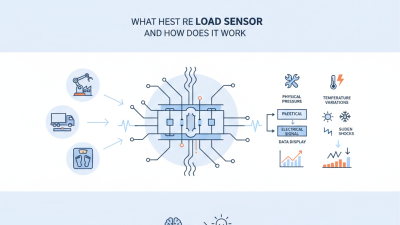
A load sensor converts force into a measurable electrical or mechanical signal. Strain-gauge sensors bond resistive elements to a metal structure. Under load, the structure bends slightly, changing electrical resistance. A Wheatstone bridge then converts this change into a readable voltage. They suit weighing, force testing, and machine monitoring. The 2024 MarketsandMarkets load-cell report projects the market to grow from about USD 2.0 billion in 2024 to nearly USD 3.0 billion by 2029. That growth reflects wider automation, not a single application.
Other designs work differently. Hydraulic load sensors translate force into fluid pressure. They tolerate overloads well, but temperature can alter fluid behavior. Piezoelectric sensors generate charge when compressed by dynamic force. They respond quickly, yet they are less suitable for long, static measurements. Capacitive sensors detect changes in distance between charged plates. They offer high sensitivity, but moisture and vibration require careful control.
The choice should follow the force profile. Static loads need stable output and low drift. Impact loads need high frequency response and strong overload protection. For legal-for-trade weighing, OIML R60 and ISO 376 provide useful calibration references. Check accuracy, hysteresis, creep, temperature effects, wiring, and mounting stiffness. Small installation errors can dominate the sensor’s specification. That part is often underestimated. Field testing remains necessary. A theoretically perfect sensor may perform poorly on a flexible frame or in a humid cabinet. Calibration records, traceable equipment, and documented operating conditions strengthen reliability.
Match the Sensor Design to Environmental and Installation Conditions
2026 How to Choose the Right Load Sensor?
Match the Sensor Design to Environmental and Installation Conditions
Choosing a load sensor starts with the installation environment, not the catalog rating. A clean laboratory needs different protection than a dusty aggregate plant. Check temperature swings, moisture, vibration, chemicals, and washdown exposure. These conditions can change measurement stability over time.
Select a sensor that matches the load direction and available mounting space. Compression sensors suit supported platforms, while tension sensors fit suspended loads. For outdoor equipment, sealed construction and protected cable entries matter. A small gap around the mounting surface can introduce side loads and inaccurate readings. Keep the force path straight. It sounds simple, but field installations often overlook it.
Review overload capacity, operating temperature, signal output, and calibration requirements together. A sensor may carry the rated load yet drift under repeated shocks. Stainless materials can help in wet areas, though they do not solve poor sealing or incorrect mounting. I have seen accurate sensors perform badly because the base was uneven. That mistake is easy to repeat. Test the complete assembly under realistic conditions, including vibration and temperature changes. Leave room for inspection and cable replacement. A compact design may save space, but it can make maintenance unnecessarily difficult. Reliable selection comes from matching the sensor design to the actual site, not an idealized drawing.
Compare Output Signals, Interfaces, and System Compatibility
Choosing the right load sensor starts with its output signal, not its rated capacity. A millivolt-per-volt bridge output suits short cable runs and simple instrumentation. However, it needs stable excitation and careful shielding. A voltage output simplifies integration, but cable resistance can still introduce errors. Current output often performs better across long industrial cables.
Interface compatibility matters just as much. Confirm whether the controller accepts analog voltage, current, digital fieldbus, or a direct USB signal. MarketsandMarkets’ 2024 Force Sensor Market report projects a 9.2% compound annual growth rate through 2029. This growth reflects wider adoption of connected measurement systems, where signal conversion and communication stability matter. Deloitte’s 2023 Smart Manufacturing Survey found that 86% of surveyed manufacturers viewed smart manufacturing as important to competitiveness. The sensor must fit that architecture, not merely produce a strong reading.
Check resolution, update rate, calibration data, grounding, and software support before installation. In my experience, a sensor with impressive accuracy can fail when its interface conflicts with the controller’s input range. ISO 376 and OIML R60 provide useful references for calibration and performance verification. Yet standards do not remove every practical problem. A wet connector, a noisy motor cable, or an overlooked sampling delay can distort valuable data. Test the complete signal path under real load conditions. Datasheets are helpful, but they are not the whole system.
2026 How to Choose the Right Load Sensor?
Compare output signals, interfaces, and system compatibility
The comparison uses a practical 1–5 suitability scale. Analog millivolt-per-volt output is widely used with dedicated weighing amplifiers, while 4–20 mA is well suited to long cable runs and industrial PLCs. CAN bus and IO-Link provide digital diagnostics and easier network integration, but require compatible controllers or gateways. A 0–10 V output is simple to connect, although voltage signals are generally more sensitive to cable noise and voltage drop than current-loop signals.
Evaluate Durability, Calibration Needs, Cost, and Supplier Support
2026 How to Choose the Right Load Sensor?
A load sensor must survive its real working environment, not just a laboratory test. Check vibration, shock, moisture, dust, temperature changes, and repeated overloads. A sealed housing helps, but sealing alone does not guarantee long service life. Ask for fatigue data and documented overload limits. In practice, mounting errors often damage sensors faster than normal machine loads. I have seen this overlooked during rushed equipment upgrades.
Calibration needs should match your measurement risk. A sensor used for safety-critical weighing may require traceable calibration and frequent verification. A stable indoor process may need less attention. Review drift, temperature compensation, test weights, and adjustment procedures. Calibration costs include downtime, labor, shipping, and replacement equipment. The cheapest sensor can become expensive when readings slowly wander.
Tips:
Compare total ownership cost, not only purchase price. Request calibration certificates, service response times, spare-part availability, and clear warranty terms. Ask how quickly technical support can diagnose unstable readings. Test the supplier with practical questions before buying. A helpful answer should include mounting advice and realistic limitations. Do not accept vague promises. Also, leave room for doubt; published specifications may not reflect your dusty, vibrating installation. A small pilot test can reveal problems that a spreadsheet misses.

 sales@loadcellsensor.com